






































































































































































































































































































W.B.C.S. Notes On – Physics – Source Of Energy.
WBCS পরীক্ষার নোট – পদার্থবিদ্যা – শক্তির উৎস।
Introduction
- Energy, which is neither created nor destroyed, has many sources; significant of them are.Continue Reading W.B.C.S. Notes On – Physics – Source Of Energy.
- Muscular energy − Most of the organisms have it (by default); this is the reason that we have the capacity to do physical works.
- Electrical energy − Most of the electrical appliances in our home run on electrical energy.
- Chemical energy − chemical energy is normally used in cooking, running vehicles, etc.
- Based on the energy reserves, energy is categorized as −
- Conventional Source of Energy − The sources of energy, which is found in limited amount (and exhaustible), are known as conventional source of energy. E.g. fossil fuels (such as coal, petroleum, etc.).
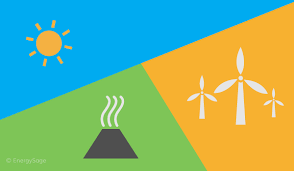
- Non-Convention Source of Energy − It is also known as renewable source of energy. E.g. wind energy, solar energy, geo-thermal energy, etc.
Thermal Power Plant
- Huge amount of fossil fuel is burnt to heat up water to produce steam, which ultimately runs a turbine and generate electricity.
- The term thermal power plant is used purposefully, as fuel is burnt to produce heat energy which is ultimately converted into the electrical energy.
Hydro Power Plants
- Running/falling water has huge potential energy; the hydro power plant converts this potential energy into electricity.
- Dams are purposefully constructed to electricity through water.
- However, construction of big dams is threatful for the respective ecosystem; therefore, big dams are allowed to be constructed only in particular geographic location.
Bio Mass Fuel
- The fuels, generated through the products of plants and animals, are known as bio mass fuel. Gobar Gas (Bio Gas) is the best example of bio mass fuel.
- Bio-gas is an excellent source of fuel, as it contains about 75% methane.
- Bio-gas burns without smoke and leaves no residue like ash in wood.
Wind Energy
- Wind has great amount of kinetic energy, which can be harnessed by wind mills.
- The rotatory motion of the windmill is set to run the turbine that ultimately generates electric energy.
- In Denmark, more than 25% of electricity (of total requirements) are generated through a vast network of windmills; therefore, it is known as ‘country of winds.’
- However, in terms of total output, Germany is ranked first.
- India has fifth position in terms of harnessing wind energy for the production of electricity.
- With the capacity of 380 MW, Kanyakumari (Tamil Nadu), is the largest wind energy farm in India.
- Wind energy is an environment-friendly technology and efficient source of renewable energy.
- However, one of the biggest limitations with the wind energy is – it cannot be set up anywhere, but rather it can be set up in the region where we can get the wind blowing consistently at the speed (at least) 15 km/hour.
Solar Energy
- The energy produced through the solar rays, is known as solar energy.
- Such kind of energy has very low maintenance cost.
- It can be used on small scale (such as only lit a tube light with fan) as well as to run a big industry, as it has a great potential.
- However, the technology is still very costly; therefore, it is difficult to make widespread.
Tidal Energy
- The energy produced by the potential power of tides is known as tidal energy.
- A turbine is set up at the opening of the dam (constructed nearby coast) that converts tidal energy to electricity.
Wave Energy
- Sea waves have great potential energy nearby the coast; hence, the electric energy produced by the sea wave is known as wave energy.
Ocean Thermal Energy
- The electric energy, produced by the temperature difference of oceanic water, is known as ocean thermal energy.
Geothermal Energy
- The electric energy, produced from the natural hot springs, is known as geothermal energy. Manikarn, Himachal Pradesh, is the site of geothermal energy in India.
Nuclear Energy
- The energy, released by the process of nuclear fission or fusion, is known as nuclear energy.
- During the process of nuclear reactions, the nuclear energy is released, which is used to generate heat; this heat energy is then used in steam turbines to produce electricity.
Our own publications are available at our webstore (click here).
For Guidance of WBCS (Exe.) Etc. Preliminary , Main Exam and Interview, Study Mat, Mock Test, Guided by WBCS Gr A Officers , Online and Classroom, Call 9674493673, or mail us at – mailus@wbcsmadeeasy.in
Visit our you tube channel WBCSMadeEasy™ You tube Channel
Please subscribe here to get all future updates on this post/page/category/website