
































































































































































































Notes On Chemistry-Matter-Mass-Isotopes-Isobars-X-Ray-Alpha-Ray-Gamma-Ray-Cathode-Ray-For WBCS Main Exam
Chemistry as a subject assumes a significant part in all competitive examination.It has a prominent role in Prelims and General studies Papers. It is an interesting subject. If aspirants are profound of this subject, no doubt you can choose this as your optional subject for W.B.C.S mains Exam. It is an endless subject .This is very easy and scoring optional if approached rightly, a correct strategy is always important.Continue Reading Notes On Chemistry-Matter-Mass-Isotopes-Isobars-X-Ray-Alpha-Ray-Gamma-Ray-Cathode-Ray-For WBCS Main Exam.
| physical properties | chemical properties |
|---|---|
|
|
SI system of measurement
- Through Metre convention in Paris (1875), this International system of units was setup.
- accordingly, each country has an institute to maintain standards of measurement
- e.g. in India it is done by National physical laboratory.
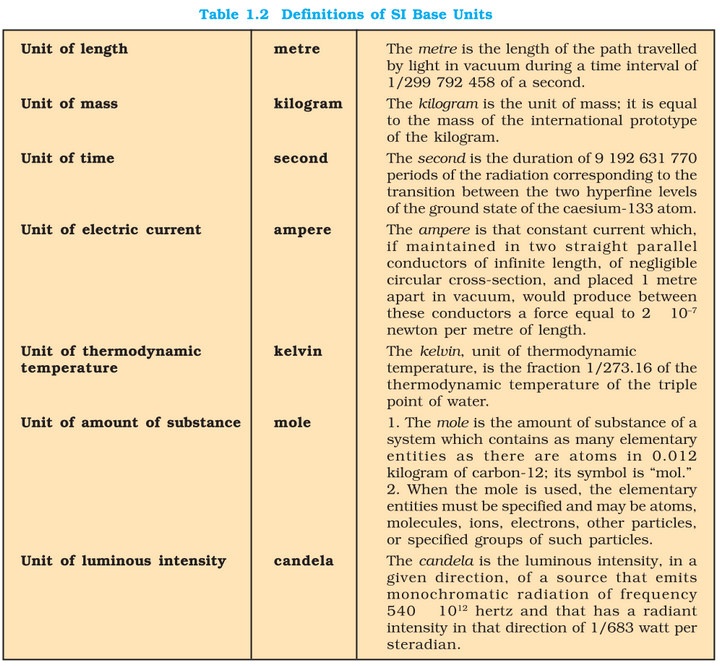
Basic units in SI measurement
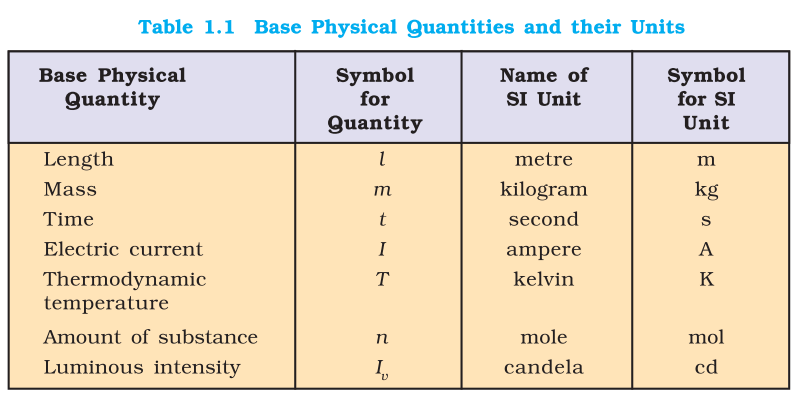
Definition of SI units
| Mass | Weight |
|---|---|
| A substance’s mass will remain same everywhere | Will change depending on gravity of the given place. |
| Measured using “Analytical balance” | measured using weighing scale |

| °C (degree celsius) |
|
|---|---|
| °F (degree fahrenheit) |
|
| K (kelvin) |
|
| Law of | Detail |
|---|---|
| 1.Conservation of Mass |
|
| 2.Definite Proportions |
|
| 3.Multiple Proportions |
|
| 4.Gaseous Volumes |
|
| 5.Avogadro Law |
|
DALTON’S ATOMIC THEORY
- Democritus, a Greek Philosopher (460 — 370 BC) said that matter is composed of small indivisible particles called ‘a-tomio’ (meaning — indivisible). Indian philosophers also made similar statements. But they had no proofs.
- Finally, a British Teacher John Dalton published book published ‘A New System of Chemical Philosophy’ (1808) with following points
- Matter consists of indivisible atoms.
- All the atoms of a given element have identical properties and identical mass.
- Atoms of different elements differ in mass.
- Compounds are formed when atoms of different elements combine in a fixed ratio.
- Chemical reactions involve reorganisation of atoms. These are neither created nor destroyed in a chemical reaction.
| Good | Bad |
|---|---|
his theory can explain following:
|
He couldn’t explain following
|
| Discovery of | Was discovered by |
|---|---|
| 1.Electron | A cathode ray discharge tube – cathode ray particles – observed though fluorescent or phosphorescent – negatively charged particles, called electrons |
| 2.Proton | modified cathode ray tube – canal rays – positively charged particles |
| 3.Neutron | Chadwick (1932). he bombarded alpha-particles on beryllium thin sheet. |
Cathode Ray Tube & Television
- 1830: Michael Faraday showed that if electricity is passed through a solution of an electrolyte, matter will be liberated and deposited at the electrodes. (1830)
- 1850s: Faraday began to study electrical discharge in cathode ray tubes
- A cathode ray tube is a sealed glass tube containing two thin metal pieces (electrodes).
- Cathode rays start from cathode and move towards the anode.
- Cathode ray will travel in straight line IF there is no electrical or magnetic field,
- If there is electrical/magnetic field, cathode rays will behave like charged particles.
- Characteristics of cathode rays (electrons) do not depend upon (1) the material of electrodes (2) nature of the gas present in the cathode ray tube.
- Cathode rays themselves are not visible but their behaviour can be observed with the help of certain kind of materials (fluorescent or phosphorescent) which glow when hit by them.
- We can observe electrical discharge through the gases only at very low pressures and at very high voltages.
- Television picture tubes are cathode ray tubes
- Television pictures result due to fluorescence on the television screen coated with certain fluorescent or phosphorescent materials.
X-Ray & Roentgen
- Wilhalm Röentgen: strike electron to dense anode metal in Cathode ray tube => rays produced => these rays cause fluorescence in the fluorescent materials placed outside the cathode ray tubes. He called them X-Rays (1895)
- Henri Becqueral coined the term radioactivity. Marie Curie, Piere Curie, Rutherford and Fredrick Soddy worked further in this field.
| Detail | penetrating power |
characteristic |
|---|---|---|
| Alpha particles | 1 |
|
| Beta Rays | 100 x alpha | negatively charged particles similar to electrons |
| Gamma-Rays | 1000 x alpha |
|
Atomic Mass
- Greek word ‘stoichiometry’ =stoicheion (meaning element) + metron (meaning measure).
- Stoichiometry calculation of masses and volumes of reactants and products of a chemical reaction.
- 19th Century scientists assigned mass of “1” to Hydrogen. (no units, only number). All the remaining elements were given mass number relative to Hydrogen.
- 1961: Carbon – 12 isotop is assigned a mass of exactly 12 atomic mass unit (amu) and masses of all other atoms are given relative to this standard.
- Thus, One atomic mass unit (AMU) = one- twelfth the mass of one carbon – 12 atom.
- Today, ‘amu’ has been replaced by ‘u’ which is known as unified mass.
- Today, we have sophisticated techniques e.g., mass spectrometry for determining the atomic masses fairly accurately.
| Atomic number (Z) | Mass Number (A) |
|---|---|
|
|
|
|
|
Isobars= same “A” but different “Z” |
Mole and Avogadro
- One mole = Amount of a substance that contains as many particles as there are atoms in exactly 12 g (or 0.012 kg) of the Carbon 12 isotope.
- 1 mol is also known as ‘Avogadro’ constant, in honour of Amedeo Avogadro. It equals to 6.022×10²³ atoms
Atomic Models
| 1.J.J.THOMSON,Britain |
|
| 2.RUTHERFORD’S NUCLEAR MODEL |
|
| 3.NEILS BOHR, Denmark |
|
| 4.Wolfgang Pauli, Austria |
|
| 5.Millikan |
|
Quantum Mechanic Model
- Classical atomic models ignore dual behavior of particles.
- Just like radiation, particles also have dual properties i.e. Wave like properties and particle like properties (French physicist, de Broglie in 1924).
- This is known as “Quantum mechanics”- Erwin Schrödinger – Nobel winner Austrian physicist was the front runner of this theoretical science.
- We can’t find the exact position and exact momentum (or velocity) of an electron at the same time, because electron and other similar particles don’t have definite paths or trajectories of electrons and other similar particles- This is Heisenberg’s Uncertainty Principle.
- Heisenberg was a German who shared Nobel with Schrödinger in Physics. He researched atomic bomb for Germany during WW2
- Electrons wave-like properties are utilized in electron microscope, it can give a magnification of about 15 million times.
Photoelectric Effect: Einstein & Planck
German physicist Max Planck observed that:
- When Light strikes surface = electrons ejected without any time lag.
- How many electrons ejected? Ans. Proportional to light’s brightness.
- How much is the kinetic energy of these ejected electrons? Ans. NOT in proportion of light’s brightness.
- If red light shined on potassium for hours but no photoelectrons are ejected.
- But even if a very weak yellow light shines on the potassium metal, the photoelectric effect is observed.
- German born American physicist Albert Einstein was able to explain this Photoelectric effect using Planck’s quantum theory of electromagnetic radiation.
- Einstein said light shining = shooting photon particle beam =collision with electrons=electrons ejected.
- Brighter light = more protons = more electrons ejected.
- He Won Nobel Prize in Physics in 1921 for his explanation of the photoelectric effect.
Spectrum
- Speed of light depends upon the nature of the medium through which it passes.
- As a result, the beam of light is deviated or refracted from its original path as it passes from one medium to another.
- The light of red colour which has longest wavelength is deviated the least while the violet light, which has shortest wavelength is deviated the most.
- Examples of continuous spectrum: (1) White light spectrum (2) rainbow. Because they have all colors from violet to red.
- The study of emission or absorption spectra is referred to as spectroscopy
Electromagnetic spectrum
- Water wave and sound wave need medium. They can’t move in vaccum
- Electromagnetic waves do not require medium and can move in vacuum.
- There are many types of electromagnetic radiation depending on their wavelength (or frequency).
- Collectively, they’re called electromagnetic spectrum
| Wavelength |
|
|---|---|
| Frequency |
|
Black Bodies
Wave nature of Electromagnetic radiation can explain following:
| Diffraction | it is the bending of wave around an obstacle |
| Interference | it is the combination of two waves of the same or different frequencies to give a wave |
- But above things can’t explain a black body radiation. Later Max Planck explained it in following manner:
- When solids are heated they emit radiation over a wide range of wavelengths.
- Heating Iron rod = dull red (low frequency) => more heating => bright red color (higher frequency)=>more heating=> white=>Blue…frequency keeps on increasing, wavelength keeps on decreasing.
- Black body is the ideal body that emits and absorbs all frequencies.
- The radiation emitted by such a body is called black body radiation.
- Black Body’s radiation depends only on its temperature….At a given temperature, intensity of radiation emitted increases with decrease of wavelength, reaches a maximum value at a given wavelength and then starts decreasing with further decrease of wavelength (something like a bell curve).
- Planck suggested that atoms and molecules could emit (or absorb) energy only in discrete quantities and not in a continuous manner. This smallest energy quantity is “quantum”.
Our own publications are available at our webstore (click here).
For Guidance of WBCS (Exe.) Etc. Preliminary , Main Exam and Interview, Study Mat, Mock Test, Guided by WBCS Gr A Officers , Online and Classroom, Call 9674493673, or mail us at – mailus@wbcsmadeeasy.in
Please subscribe here to get all future updates on this post/page/category/website