








































































































































































































































































































W.B.C.S. Examination Notes On – Subphylum Ciliophora – Zoology Notes.
- They possess simple ciliary organelles for locomotion, infraciliature is subpeculiar.Continue Reading W.B.C.S. Examination Notes On – Subphylum Ciliophora – Zoology Notes.
- They have two nuclei, a trophic macronucleus, and a reproductive micronucleus.
- Binary fission is perkinetal.
- Conjugation takes place with the fusion of nuclei, autogamy and cytogamy also occur.
- There are never any free gametes.
- Nutrition is mixotrophic or heterotrophic.
- They usually have a cytostome.
Class 1: Ciliata
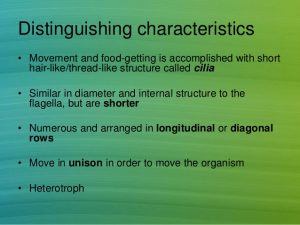
- They possess cilia or compound ciliary structure as locomotory or food acquiring organelles.
- There is the presence of an infraciliary system, composed of basal granules below the cell surface and interconnected by longitudinal fibrils.
- Most ciliates possess a cell mouth or cytostome.
- Anal aperture (cytopyge) permanent.
- Two types of nuclei, one vegetative (macronucleus) and the other reproductive (micronucleus).
- Fission is transverse.
- Sexual reproduction never involves the formation of free gametes.
- One or more contractile vacuoles present even in marine and parasitic types.
Subclass 1: Holotricha
- Body cilia simple and uniform.
- Buccal cilia mostly absent.
Order 1: Gymnostomatida.
- Examples: Coleps, Dileptus, Didinium, Prorodon, Nassula, etc.
Order 2: Trichostomatida.
- Examples: Colpoda, Balantidium, etc.
Order 3: Chonotrichida.
- Examples: Spirochona, Lobochona, Chilodochona, etc.
Order 4: Apostomatida.
- Example: Hyalophysa.
Order 5: Astomatida.
- Examples: Anoplophyra, Maupasella, Hoplitophyra, etc
Order 6: Hymenostomatida.
- Examples: Colpidium, Tetrahymena, Paramecium, etc.
Order 7: Thigmotrichida.
- Examples: Thigmophyra, Boveria, etc.
Please subscribe here to get all future updates on this post/page/category/website
[email-subscribers namefield=”YES” desc=”” group=”]